Bang · Breach · Clear

ENGINEER

Field Manuals · Courses · Breaching · Bridge Ops · Sapper Intel

No PowerPoint. No garrison b.s. Just the manuals, the math, and the mission. For the 12 series.

ESSAYONS
↓ scroll ↓
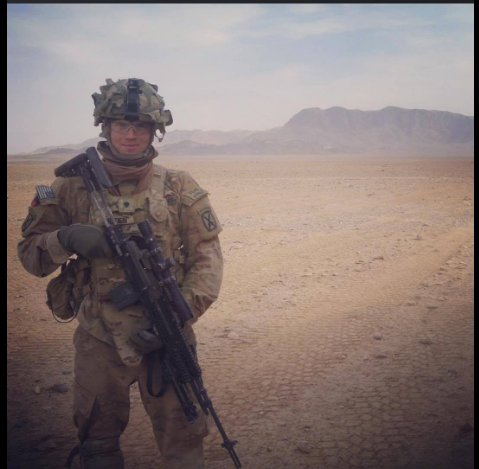
SFC Pruden — Combat Engineer
SFC Pruden — Downrange
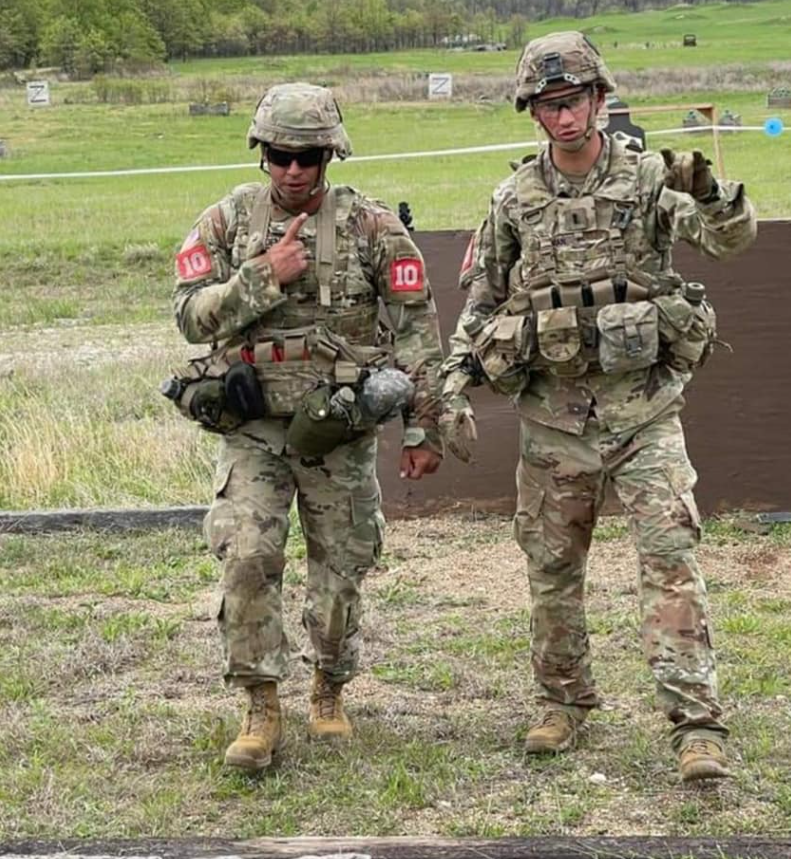
SFC Pruden — Training
This site is dedicated to

SFC PRUDEN

Sergeant First Class · Combat Engineer · Sapper
de Fleury Medal Recipient
"Anything worth starting is worth finishing regardless of how much you must sacrifice — and you have to believe everything you set out to do is worth it. Worth the struggle, worth the pain, the setbacks, the breaks, the blood, the tears."
Essayons ESSAYONS — LET US TRY
↓ Read His Full Statement
NOTE: All manuals linked here are UNCLASSIFIED and publicly available via Army Publishing Directorate (APD). Nothing FOUO or above is hosted here.

12 Series — Engineer Specialties

Resources organized by MOS — more coming for each branch

12BCombat Engineer
12CBridge Crewmember
12DDiver
12GQuarrying Specialist
12HConstruction Engineering Supervisor
12KPlumber
12MFirefighter
12NHorizontal Construction Engineer
12PPrime Power Production Specialist
12QPower Line Distribution Specialist
12RInterior Electrician
12TTechnical Engineer
12VConcrete & Asphalt Equipment Operator
12WCarpentry and Masonry Specialist
12XGeneral Engineering Supervisor
12YGeospatial Engineer
12ZCombat Engineering Senior Sergeant
SAPPERTab — Essayons

The Library

Public · APD

Combined Arms Breaching Ops

ATP 3-90.4

Combined arms breaching doctrine. Assault, demolition, and mechanical breaching integration with maneuver units. Lane assault tactics.

↗ Search APD
Public · APD

Engineer Reconnaissance

ATP 3-34.80

Route, bridge, and area reconnaissance. Report formats, classification procedures, trafficability analysis. The recon engineer's handbook.

↗ Search APD
Public · APD

Engineer Brigade Operations

FM 3-34.2

Combined arms and engineer operations at brigade level. Assault bridging, gap crossing, and obstacle integration.

↗ Search APD
Public · APD

Tactical Bridging

TM 5-5420-212-10

Medium Girder Bridge operator manual. Erection, load classification, site selection. The 12C reference for gap crossing under fire.

↗ Search APD
Public · APD

Military Explosives

TM 9-1300-214

Characteristics and performance data for military explosives. C4, TNT, PETN, detonators, priming systems. The technical reference for demolitions.

↓ Download (Hosted)
Public · APD

Survivability Operations

ATP 3-37.34

Hardening, fighting positions, protective construction. From individual hasty positions to hardened command posts.

↗ Search APD
Reference

Obstacle Integration

FM 90-7 (Legacy)

Combined arms obstacle integration. FASCAM, wire, AT ditches, dragon's teeth. Most detailed obstacle planning reference available.

↓ Download (Hosted)
Public · APD

Ranger Handbook

TC 3-21.76

Patrol planning, ambushes, recon ops, demolitions, mountaineering, and field craft. Ranger standard — useful for any 12-series leader.

↓ Download (Hosted)
Public · APD

The Sapper Handbook

Sapper Reference

Demolitions, breaching, mines, obstacles, bridge recon, and booby traps. The pocket reference built for the Sapper Leader Course.

↓ Download (Hosted)
Public · APD

Soldier's Manual of Common Tasks

STP 21-1-SMCT

Individual task standards for every soldier. Warrior skills Level 1 — the baseline for combat readiness and skill certifications.

↓ Download (Hosted)
Public · APD

Map Reading & Land Navigation

TC 3-25.26 · Part 1

Grid coordinates, contour lines, terrain association, compass, pace count, and resection. The land nav bible.

↓ Download (Hosted)
Public · APD

Map Reading & Land Navigation

TC 3-25.26 · Part 2

Advanced nav — aerial photos, MGRS, GPS employment, and military map symbols. The continuation of Part 1.

↓ Download (Hosted)
Public · APD

Tactical Radio Operations

FM 6-02.53

SINCGARS, ASIP, frequency management, PACE planning, and net operations. Comms doctrine for maneuver and engineer teams.

↓ Download (Hosted)
Public · APD

Countermobility Operations

ATP 3-90.8

Obstacle planning, emplacement, and combined arms integration. Minefield types, wire, AT ditches — the countermobility planning reference.

↓ Download (Hosted)
Reference (Legacy)

Engineer Survivability

FM 3-34.5

Hardening, camouflage, and force protection construction. Predecessor to ATP 3-37.34 — still the most detailed survivability field reference.

↓ Download (Hosted)
Reference

US Army Explosives & Demolitions

Army Explosives Ref

Properties, handling, storage, and employment of military explosives. Supplementary reference for demolitions planning and training.

↓ Download (Hosted)
Cross-Service · USMC

Engineer Recon Operations

MCWP 3-17.4

Marine Corps engineer reconnaissance — route, area, and bridge recon procedures. Cross-service reference aligned with Army doctrine.

↓ Download (Hosted)

CE Courses & Schools

Basic Combat Engineer Course

12B OSUT · Fort Leonard Wood · ~22 weeks
  • Phase I — Basic Combat Training
  • Phase II — Demolitions and priming systems
  • Phase II — Mine and IED recognition
  • Phase II — Obstacle emplacement and reduction
  • Phase II — Fighting position construction
  • Phase II — Route clearance fundamentals
  • Phase II — Basic breaching techniques
  • Phase II — Basic bridge operations

Bridging Operations Course

12C OSUT · Fort Leonard Wood
  • Phase I — Basic Combat Training
  • Phase II — Medium Girder Bridge (MGB) erection
  • Phase II — Improved Ribbon Bridge (IRB) wet gap crossing
  • Phase II — Assault float bridge operations
  • Phase II — Bridge load classification
  • Phase II — Site reconnaissance and selection
  • Phase II — Rigging and crane operations

Combat Diver Qualification Course

CDQC · Key West, FL · 12D · ~4 weeks
  • Phase I — Water confidence and pool qualifications
  • Phase II — Open-circuit scuba operations
  • Phase III — Closed-circuit rebreather (LAR-V Drager)
  • Phase IV — Hydrographic reconnaissance
  • Phase IV — Underwater obstacle marking and breaching
  • Phase IV — Night dive operations

Sapper Leader Course

SLC · 14th Engineer Battalion · FLW · ~28 days
  • Phase I — Academics: demolitions, breaching, recon
  • Phase II — Field operations and leadership lanes
  • Phase II — Airborne / air assault integration
  • Phase II — Foot marches and direct action missions
  • Phase III — Culminating exercise
  • Go/No-Go lane grading throughout
  • Sapper Tab awarded upon completion

Urban Master Breacher Course

UMBC · Fort Leonard Wood
  • Phase I — Mechanical breaching tools and TTP
  • Phase I — Ballistic breaching — shotgun / standoff
  • Phase II — Explosive breaching — door, wall, and floor
  • Phase II — Breach site assessment and selection
  • Phase II — Structure defeat planning
  • Phase III — Live-fire breaching iterations

Route Clearance Course

RCC · Fort Leonard Wood
  • Phase I — IED recognition and pattern analysis
  • Phase I — Platform familiarization: Husky, Buffalo, RG-31
  • Phase II — Rollers, mine sweepers, detector protocols
  • Phase II — EOD integration and handoff procedures
  • Phase II — React to contact during clearance operations
  • Phase II — Reporting formats: SALUTE, SPOT

Combat Engineer Heavy Track Course

CEHTC · Fort Leonard Wood
  • Phase I — Track vehicle PMCS standards
  • Phase II — M9 ACE operator qualification
  • Phase II — D7/D9 armored dozer operations
  • Phase II — AVLB emplacement and retrieval
  • Phase II — ABV firing and lane clearance
  • Phase II — MICLIC tow and firing procedures

Engineer Warrant Officer Basic

WOBC · 120A Warrant Officer Pipeline
  • Phase I — Technical engineering fundamentals
  • Phase I — MDMP and mission planning
  • Phase II — Resource and training management
  • Phase II — Operational-level engineer advising
  • Phase II — Staff integration and briefing standards

Basic Leader Course

BLC · NCOES Pipeline · Phase 1
  • Troop-leading procedures (TLP)
  • NCODP and training management
  • Land navigation — day and night
  • Warrior tasks and battle drills
  • Required for promotion to SSG

Advanced Leader Course

ALC · NCOES Pipeline · Phase 2
  • MDMP — Military Decision-Making Process
  • Operations orders and briefing standards
  • Squad and section-level leadership
  • Training management and counseling
  • Required for promotion to SFC

Senior Leader Course

SLC · NCOES Pipeline · Phase 3
  • Company and battalion-level operations
  • Operational planning and OPORD production
  • Personnel management and counseling
  • Land navigation — day, night, unknown
  • Required for promotion to MSG
  • Separate from Sapper Leader Course (Tab)

Sapper Stakes / Engineer Competition

Annual · Unit Level
  • Squad-level demolitions lanes
  • Timed breach and assault events
  • Technical knowledge evaluations
  • Land navigation — day and night
  • Weapons qualifications
  • Foot march standards

Engineer Breaching

Obstacle

Wire Obstacle Breaching

Concertina · Tanglefoot · Triple Strand

Hasty and deliberate wire breach techniques. Bangalore torpedo employment, manual lane clearing, wire cutters, and marking. Maintaining momentum through protective wire.

→ Notes
Combat

Minefield Breaching

APOBS · MICLIC · Manual Probing

Anti-Personnel Obstacle Breaching System (APOBS), Mine Clearing Line Charge (MICLIC), and manual lane probing under fire. Lane marking and reporting procedures.

→ Notes
Mobility

Ditch and Gap Crossing

AT Ditch · Wet Gap · Tank Ditch Reduction

Reducing anti-tank ditches and natural gaps. Dozer fill, fascine employment, assault bridging, and AVLB deployment for vehicle mobility under fire.

→ Notes
Vehicle

Armored Mechanical Breach

ABV · MCAB · D9 Dozer

Assault Breacher Vehicle (ABV), Mine-Clearing Armor Blade (MCAB), and D9 bulldozer breach. Armor-protected mechanical lane clearing with flail and plow systems.

→ Notes
Explosive

Wall Breaching

Mouse Hole · Frame Charges · C4

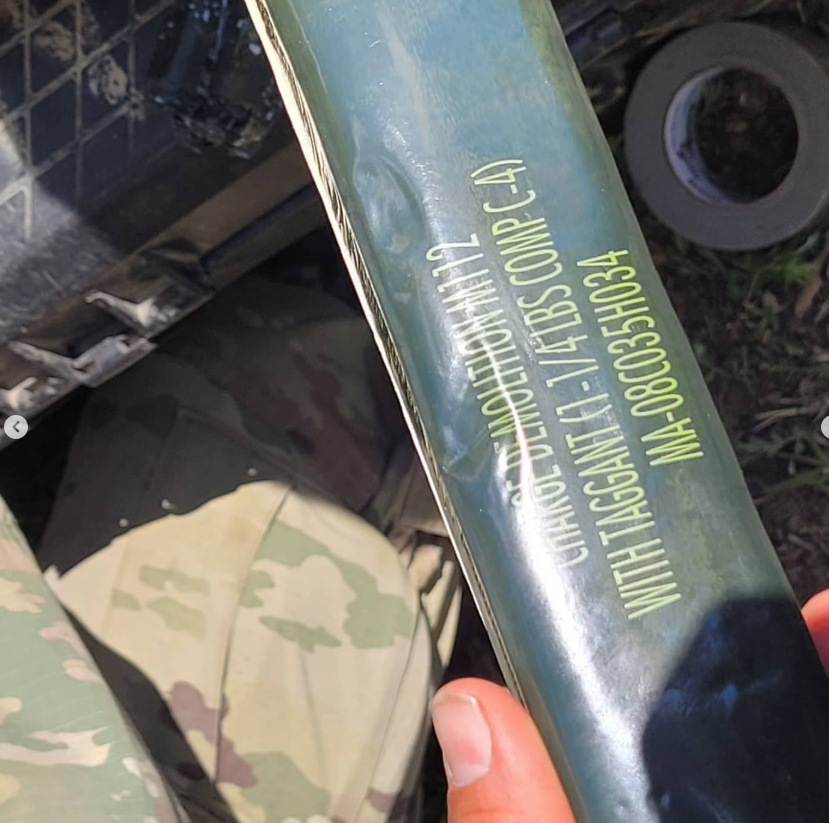
Frame charges for mouse holes. CMU vs. poured concrete vs. brick. Construction factor, P formula, M112 C4 calculations. Creating a man-sized breach in built-up areas.

→ Notes
Explosive

Door Breaching Charges

Linear · Strip · Shotgun Charges

Calculating charge weight for door defeat. Hinge vs. lock-side attack, standoff charges, door type considerations — hollow-core, steel, reinforced.

→ Notes
Mechanical

Mechanical Breaching Tools

Halligan · Ram · Bolt Cutters · HOOLIGAN

Halligan bar techniques, battering ram application, lock defeat, hinge removal. No explosives — noise discipline and denied-entry operations.

→ Notes
Relative Effectiveness Factor (RE)
Compares explosive power to TNT (RE = 1.00). Used to convert charge weights between explosive types. Always verify against TM 9-1300-214.
ExplosiveRE FactorNotes
TNT1.00Baseline reference
Comp C-41.34Standard demolition block
PETN1.27Det cord core, sheet explosive
Tetryl1.20Booster charges
Composition B1.17Artillery, shaped charges
ANFO0.87Low-order cratering
40% Dynamite0.67Commercial, varies by grade
CONVERSION Weight (new explosive) = Weight (TNT) ÷ RE factor
Minimum Safe Distance (MSD)
Based on Net Explosive Weight (NEW) — total weight of explosive, not the container. Verify with FM 5-34 tables for all charges before executing.
Personnel PositionMSD
Unwarned, in the open300 m (standard minimum)
Prone, no cover300 m
Covered position (defilade)50 m minimum
Hasty foxhole / fighting position50 m minimum
Fragment hazard (general)600 m caution area
NOTE MSD increases with NEW. Use FM 5-34 Table B-1 for charge-specific distances.
*three slow boot stomps*

Squared away soldiers don't rely on signal downrange. These formulas go on paper, in your pocket, before you step on that lane.

— Sgt. PETN
Timber Cutting — C4
P = D² ÷ 40
P = pounds of C-4 required
D = smallest dimension (inches)
For trees and timber. Measure smallest cross-section. Place charge in contact on the side away from the desired fall direction. Double charge for green/wet timber.
RULE OF THUMB 6" timber = 6² ÷ 40 = 0.9 lbs C-4
Steel Cutting — C4
P = 3/8 × D
P = pounds of C-4 required
D = thickness in inches
For steel beams, rails, and plate. Shaped charges (CLSAP) preferred when available — far more efficient than bulk explosive against hardened steel.
RULE OF THUMB 1" steel plate = 3/8 × 1 = 0.375 lbs C-4
Breaching Charge — P Formula
P = R × C × T
P = lbs of TNT equivalent
R = material factor (see table)
C = construction factor
T = thickness in feet
MaterialR Factor
Brick / CMU3
Reinforced concrete8
Plain concrete5
Wood frame1
THEN CONVERT C-4 lbs = P (TNT equivalent) ÷ RE (1.34)
Crater Charge
P = 2R³
P = pounds of TNT equivalent
R = desired crater radius in feet
For road and airfield denial. Burial depth = 0.6 × R for optimum crater. Tamping increases effect — use soil overburden where possible.
EXAMPLE 5 ft radius = 2 × 5³ = 250 lbs TNT = ~187 lbs C-4
Det Cord — Grain Weight
50 gr/ft — Standard PETN
50 gr/ft = ~3.24 grams PETN per foot
Velocity = ~21,000 ft/sec (6,400 m/sec)
Used for priming, branch lines, ring mains, and simultaneous initiation. Does NOT replace a blasting cap — always initiate det cord with a cap or electric initiator.
NOTE 100 ft of 50 gr/ft cord = ~32 grams PETN = ~0.07 lbs
Bangalore Torpedo
1 section = 5 ft, ~2 lbs explosive
M1A2 = standard Army Bangalore
Width cleared = ~1 meter per section
Used for hasty wire breaching. Connect sections before pushing — do not push individual sections. Double-strand for concertina. Mark lane immediately after detonation.
RULE OF THUMB 1 section per strand of wire + 1 overlap section
*three slow boot stomps*

Squared away soldiers don't rely on signal downrange. These formulas go on paper, in your pocket, before you step on that lane.

— Sgt. PETN
All formulas are reference only. Verify against current FM 5-34, TM 9-1300-214, and applicable SOPs before executing any demolition operation.

The Measure of a Man

Before this rant I want to say I am deeply humbled by the love and support you all have shown during this most recent endeavor of mine. With a full heart I can honestly say you all have made the struggles and tribulations in this life that much more worth it. I am thankful and grateful that I have each and every one of you in my life. I count you as my brothers and mentors and friends. I am and will always be here for each and every one of you. If you ever are in need I will answer the call. I promise you all that. You all have impacted my journey and have helped me grow. From the depths of my heart — Thank you.

The final diagnosis of my injury is I shattered one of the bones in my foot in three pieces and will have a 6-month to 1-year recovery as long as the pieces remain in the position they are in now. So I will rise again and come back stronger than before — you can bet on that.

I'm asked was it worth it and the answer is this: Anything worth starting is worth finishing regardless of how much you must sacrifice and you have to believe everything you set out to do is worth it. Worth the struggle, worth the pain, the setbacks, the breaks, the blood, the tears — because if you don't believe with every fiber of your body that it was worth the journey then you will begin to grow a distaste for life.

The question I always ask myself is "how do you measure a man?" Over time I have honed it into this — you measure him by: how hard he loves, how selfless he lives, how strong his word is, how much loyalty he shows his friends, the fortitude of his courage, and last and most importantly how immense his passion and desire is to achieve his Telos.

We are on this earth to fulfill our potential and find our true limits. That is only accomplished through setting goals and then seeing them through. Once done the next goal should be a little harder and require a little more effort than before. Once you get this rhythm down you push — you push and push until the goals set before you are mountains and oceans and seem impossible. Once there you do everything in your power to make it to the end state, sacrificing everything you must. For in these acts you will find your true raw limitations.

The further we pursue our limitations and fulfill our potential, the more we can help those around us do the same. So on your path in life don't forget to bestow what you have learned and endured upon others so that they can come to know their true potential. You all have what it takes to be a better version of your yesterday self. I do what I do not to be the best there ever was. I do what I do to be the best version of me. As long as you strive daily to outdo your former self you should be able to walk tall with pride and call yourself successful and a winner.

"I would rather be ashes than dust! I would rather that my spark should burn out in a brilliant blaze than it should be stifled by dry-rot. I would rather be a superb meteor, every atom of me in magnificent glow, than a sleepy and permanent planet. The function of man is to live, not to exist. I shall not waste my days trying to prolong them. I shall use my time."

— Jack London

"The longer I live, the more I am certain that the great difference between men — between the feeble and the powerful, the great and the insignificant — is energy, invincible determination — a purpose once fixed, and then — death or victory. That quality will do anything that can be done in this world, and no talents, no circumstances, no opportunities, will make a two-legged creature a man without it."

— Sir Thomas Fowell Buxton
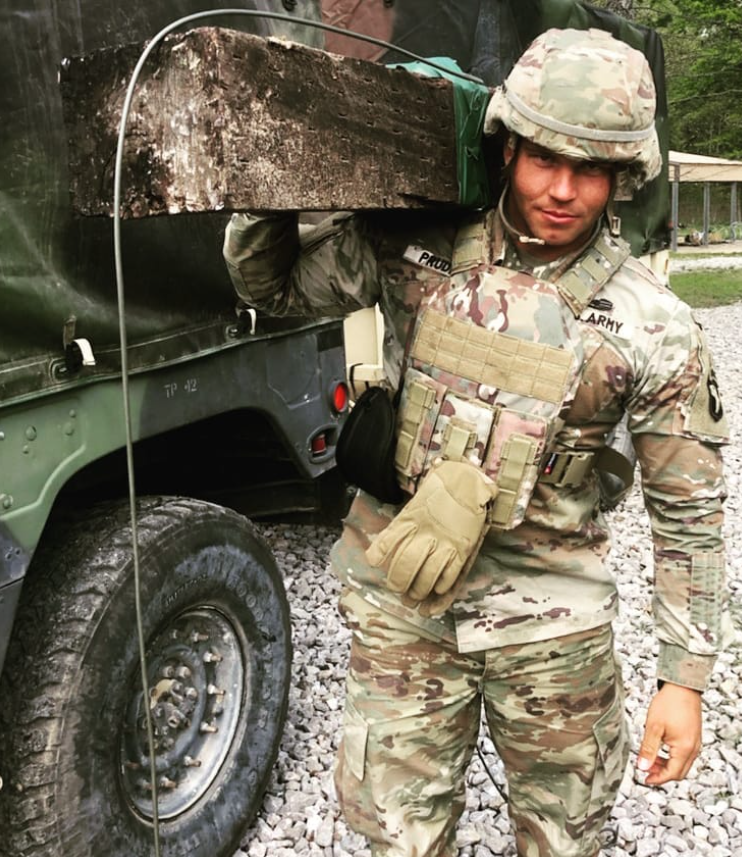
— SFC PRUDEN Combat Engineer · Sapper

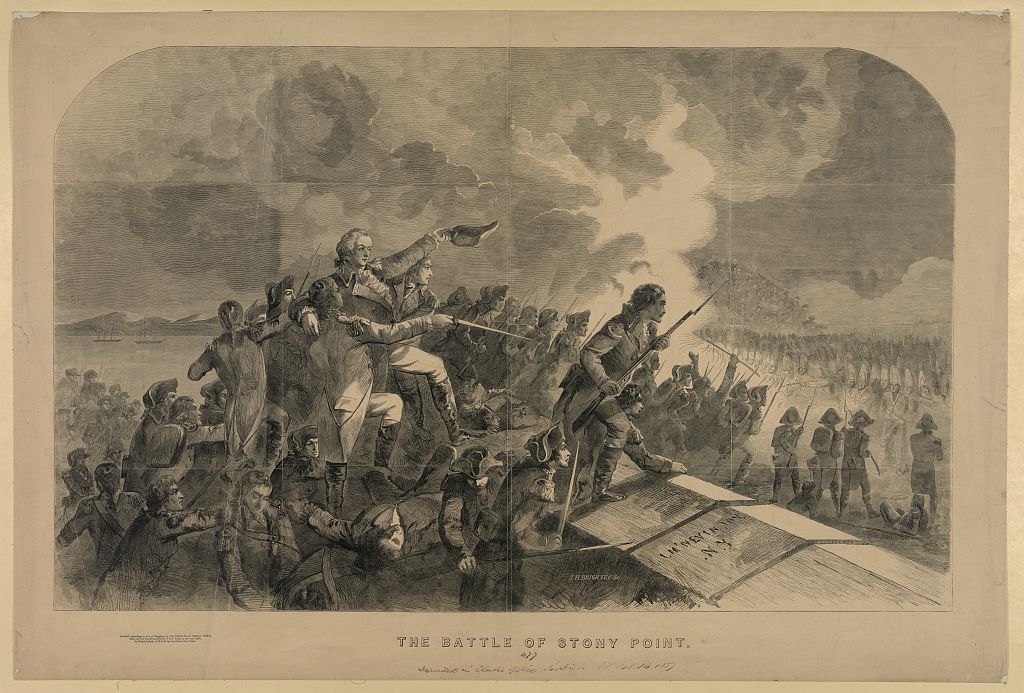
The Battle of Stony Point

Where the combat engineer earned his lineage. July 15, 1779 — 147 years before Fort Leonard Wood would train the men who carry the castle.

The Battle of Stony Point, 1779
The Battle of Stony Point · 1779 · de Fleury first over the wall

In June 1779, British forces captured two American forts on the Hudson River — Stony Point and Verplanck's Point, 30 miles from Manhattan. The enemy fortified Stony Point heavily, a rocky peninsula jutting half a mile into the river with 150-foot crags, swamp flooding at high tide, and a double abatis. They called it "Little Gibraltar."

General Washington knew British control of that stretch of river threatened West Point and severed communications between the colonies. He tasked Brigadier General "Mad" Anthony Wayne and his light infantry corps — four regiments of hand-picked combat veterans.

On July 15, Wayne's men unloaded weapons and turned in their ammunition. The assault would be silent — fixed bayonets and hand-to-hand combat only. No gunfire. Secrecy was so tight the soldiers didn't know where they were going. They waded waist-deep into the flooded causeway as a British picket sounded the alarm.

Colonel François-Louis de Fleury, a French engineer officer serving the Continental Army, was second in command of the 1st Regiment. Through the fierce fighting — Wayne and Febiger both took head wounds — de Fleury pressed the assault up the rocky slope.

First over the wall — de Fleury led the breach. He was followed by a wave of American bayonets. Rushing to the flagpole, de Fleury cut the British colors from the staff. Stony Point was retaken.

On 1 October 1779, de Fleury stood before the Continental Congress — the men who wrote the Declaration of Independence — and was awarded a medal struck in his honor for valor at Stony Point. The combat engineer traces his lineage to that wall.

Coming Soon
Google Play · Pending Review
Android App · Free · Offline
PETN.US App
13 field manuals · 16 MOS cards · Demo calculator · Works offline. Everything on this site, in your pocket.
↓ Get the App

The Playlist

Hardstyle 4x4 · PETNTUNES
Scarlet Screams · PETNTUNES
ACID · PETNTUNES
INTHEBREACH · PETNTUNES
PSYOP · PETNTUNES
Seek & Destroy · White Phosphor
Seek & Destroy 2 · White Phosphor
ek0ms · ek0ms